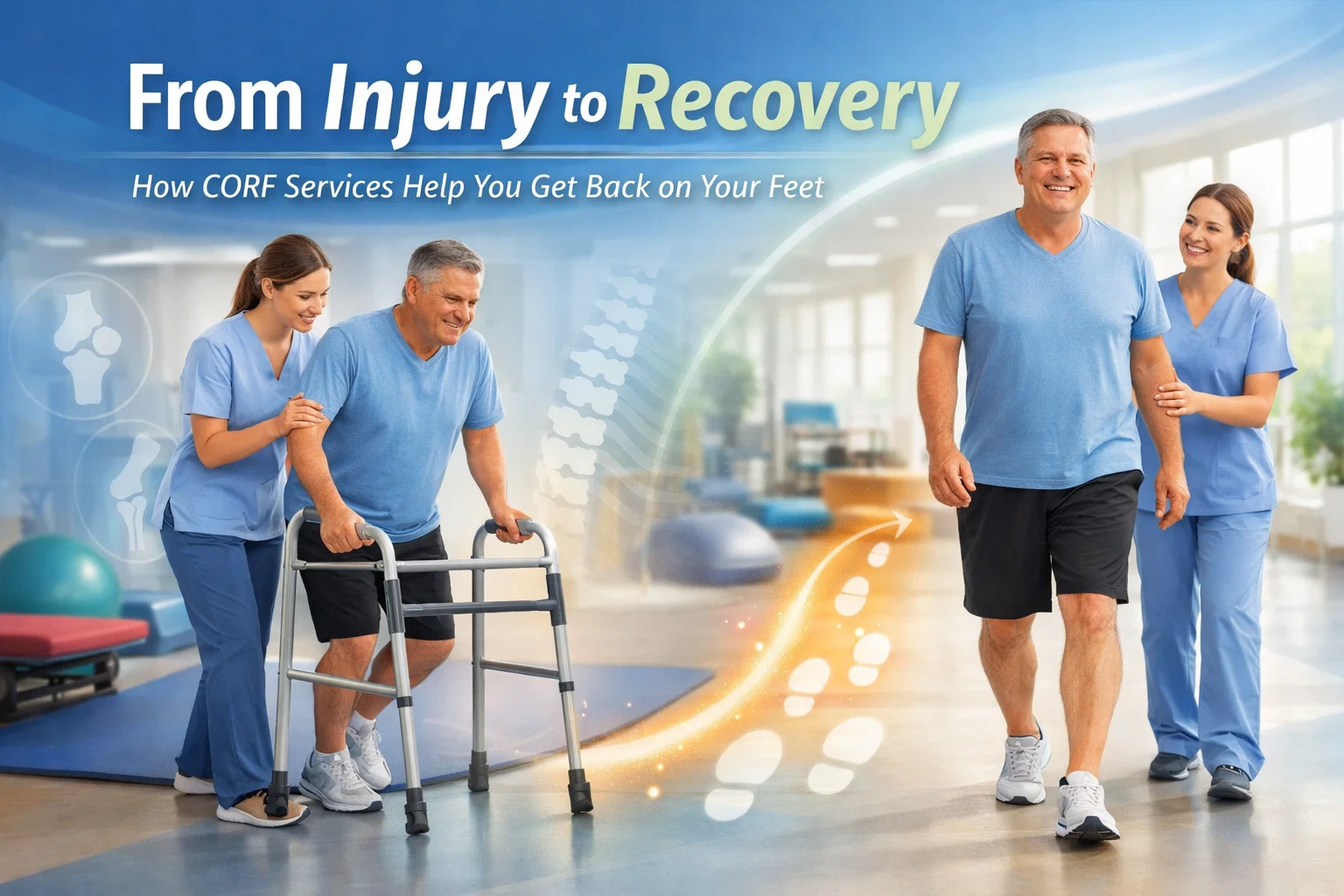
A 58-year-old construction worker, Mr. David, experienced a severe crush injury to his left foot when heavy machinery ran over it at his workplace. A complicated injury includes multiple fractures and damaged soft tissue that caused an extensive period of immobilization. To regain motion and muscle strengthening, surgical intervention was needed. Therefore, he was referred to a CORF service that assisted him throughout his rehabilitation journey.
The Certified Outpatient Rehabilitation Facility operates through multidisciplinary teams. A CORF physician develops personalized treatment plans for foot injury rehabilitation. Physical therapists conduct initial procedures and provide post-surgery foot care to control pain, alleviate swelling, and prevent further injury. The follow-up sessions under the medical team, including physicians, consultants, physical and occupational therapists, follow a functional training program that reduces pain, restores motion, strengthens, and improves limb function after surgery.
Occupational therapists perform a range of motion strengthening exercises that improve functional movement, stability, and muscle power. OT exercises build functional fitness that helps patients execute their daily activities independently. Furthermore, using adaptive therapy equipment and orthotic devices supports patient therapy through strength training for the foot, ankle, and lower leg muscles. The expert nurses ensure proper use and fitting of artificial limbs or prosthetic devices that relieve pain and improve mobility.
As prolonged illness often causes mental and emotional distress and anxiety, which makes recovery a difficult process, therefore, patients are provided with personalized therapy. The psychologist organizes various psychotherapy sessions, such as talk therapy and interviews that explore the patient’s feelings and behaviors. A detailed discussion of different psychosocial aspects of injury helps reduce emotional distress. Additionally, personalized therapy sessions help patients learn problem-solving, skills development, and healthier coping techniques that boost self-awareness and improve the emotional, cognitive, and behavioral functioning of the patients.
The key purpose of writing this article is to let patients undergoing knee replacement surgery or experiencing pain, discomfort, and immobility due to foot injury explore a comprehensive CORF rehabilitation program that helps patients regain motion, strength, and muscle power. Reading this informative guide will assist patients and their families to learn about different CORF services, comprising physical and occupational therapy, speech pathology, and other cognitive supportive services that develop a personalized treatment plan based on the patient’s specific needs and recovery goals. The skilled therapist, medical supervisors, and other functional trainers help patients manage pain and improve mobility to execute daily activities without assistance. An outstanding cohesive self-care management program offered by physicians, physical therapists, and social workers empowers patients to cope with chronic conditions, regain strength, willpower, and mobility, and improve their overall quality of life.
Understanding CORF Services
Patients with complex medical conditions and injuries need acute care. CORF rehabilitation services intend to provide self-care management and promote functional independence through multidisciplinary services. Physical and occupational therapists, speech pathologists, and psychological experts perform different types of rehabilitation services under one roof and in the supervision of a coordinated medical facility. Before performing intense therapy exercises,
CORF Role in Rehabilitation
CORFs assess a patient’s injury and health condition and review their medical history. Registering patient progress allows therapists to modify the treatment plan, integrating a cohesive approach to recovery. It encompasses physical function, strength, and mobility workouts that improve a patient’s physical condition and expedite the healing process.
Occupational therapy in rehabilitation allows OT therapists to perform a range of occupational therapy activities. It includes training related to activities of daily living and personal care, and instrumental activities that help patients learn to manage complex tasks such as money management. Cognitive and sensory training increases their memory, problem-solving, and visual-motor skills.
Neurological rehab allows neurological specialists to perform mirror therapy, electrical stimulation, and balance training for patients suffering from stroke or brain injury. Using adaptive equipment helps manage chronic pain and improve fine motor skills to perform household tasks without any assistance.
Cognitive behavioral rehabilitation therapy further assists patients with foot injury or neurodegenerative diseases in developing new skills for injury prevention and safe practices for enhanced well-being.
Other Rehab Services
Other rehabilitation services are delivered in various settings such as home care, inpatient rehab, and outpatient PT clinics. Depending on the patient’s injury, health condition, and intensity of care, the patient and their families chose an appropriate rehab center. For instance, comprehensive outpatient rehabilitation services are provided to patients who suffer from temporary illness and have the ability to travel to a hospital or health care center and have direct access to physical, occupational, or speech therapy daily or weekly. These patients are provided with coordinated, multidisciplinary therapy cohesively in one place.
Healthcare accessibility, encompassing an inpatient rehabilitation facility, is offered to patients with complex medical conditions. The patient stays overnight at the facility and needs intensive medical treatment and rehabilitation care for at least three hours until they restore their complete physical health.
Home care is another Medicare benefit for those patients who have an acute illness and are homebound. Since they are unable to commute to an outpatient facility such as treatment centers or clinics, they are provided with expert healthcare facilitation in their residence.
Regulatory and Insurance Overview
The insurance coverage for CORF services in 2025 is regulated by the Medicare and Medicaid Services. The outpatient rehabilitation services are covered under Medicare Part B, certified by a professional physician. The insurance framework covers necessary outpatient rehabilitation of an injury, disability, or illness. Regarding the cost and insurance coverage, Medicare ensures patient safety and prompt medical reimbursement. Medicare insurance regulations include joint insurance. Medicare services cover 80% of the Medicare-approved amount for CORF services, while the patients are required to pay only 20% of the cost.
The Recovery Journey with CORF Services
Early Clinical Assessment
An exceptional, cohesive recovery program is executed through an integrated, patient-centered, and multidisciplinary approach. A team of health experts, comprising medical supervisors, therapists, consultants, and non-physician staff, conducts an initial evaluation. A patient screening performed by a multidisciplinary team serves as a roadmap for a patient’s recovery and rehabilitation. A comprehensive examination begins with the patient’s medical history, such as existing and constant symptoms, past illnesses, surgeries, medications, and lifestyle habits. The pain assessment of a foot injury allows the physician to know the location, type, and severity of the pain. How the injury occurred, the timing when the pain gets worse, and how it affects daily activities. Moreover, the medical practitioner also learns about associated symptoms and previous injuries. Detailed physical examination and performing different types help in providing a medical diagnosis and assist the health consultants in preparing a personalized treatment plan.
A Customized Treatment Plan
A thorough personalized treatment plan prepared and supervised by a surgeon addresses the patient’s specific needs. The treatment goals and objectives include specific therapies, medications, diet, and therapy exercises approved by the CORF services before treatment begins
Based on the medical assessment and specific treatment, the physical therapist formulates a physical therapy plan including therapy interventions, frequency, and duration. In case of acute illness and injury, the therapists and mental health solutions perform regular and bi-weekly therapy sessions from 45-60 minutes. The therapy includes training for personal care exercises that improve gross motor skills and enhance cognitive practices to manage personal grooming, eating, cooking, and maintain daily routine efficiently. Therapeutic social groups help patients learn coping skills, gain self-awareness, and improve social interactions in a collaborative environment.
Monitoring Progress
The health team, including the physician and therapists, regularly assesses patient progress through follow-up appointments, physical examinations, and medical test reports. Data analytics use digital technologies and devices such as smart scales, glucose meters, pulse oximeters, health monitoring devices, and wearable sensors to collect real-time data from patients. Based on clinical assessment, the physician evaluates whether the current treatment care plan is effective or needs modification to improve the patient’s health status. Moreover, they prepare recovery milestones and develop specialized health care plans that include long-term self-care management, improve rehabilitation experience, and help patients recover sooner.
Key CORF Services That Aid Recovery
If you are suffering from chronic pain due to a foot injury and are trying to improve joint motions and muscle movement. You must require physical therapy assistance from skilled professionals. It implies that you access outpatient rehabilitation facility services consisting of a broad spectrum of therapeutic services performed by an integrated, multidisciplinary professionals. Physicians, physical therapists, occupational therapists, and psychologists collaborate on preparing a personalized plan of treatment and specialized therapies to improve fine motor skills, muscle strengthening and movement, and cognitive and sensory training that accelerates physical function.
Physical Therapy Services
Physical therapy for foot injury follows a detailed treatment plan prepared by a professional CORF physician before the beginning of the treatment. The specific care plan covers post-surgical rehab, pain management, injury recovery, and safety interventions to prevent the effects of injury. During 45 to 60-minute therapy sessions, the experts conduct exercises for mobility such as towel stretches or heel cord stretches. Strength activities include resistance band exercises, sitting on heels, and weighted ball work. The balance improvement exercises include push-ups, with variations, and standing balance with a single leg..
Occupational Therapy Includes
OT therapy follows customized plans that focus on improving self-care management and developing motor/cognitive skills in patients suffering from podiatric trauma or foot ailments. OT for a foot injury involves targeted exercises such as activities of daily living (ADL) that restore daily living skills and independence. Adaptive strategies for home and work environments include therapeutic techniques and prosthetic or orthotic devices that alleviate pain and swelling in the feet, prevent breakage of ligaments, bones, and tendons. Thus, facilitates mobility and enhances ambulation.
Pain Management and Support Services
Rehabilitation programs for podiatric injury include physical therapy exercises that bring pain relief. It includes ice/heat application, therapeutic massage, ultrasound, and electrical stimulation (TENS) to alleviate pain and swelling in the feet. Based on treatment and rehabilitation goals, the therapist employs balance therapy exercises, such as standing on one leg, heel-to-toe walking, to help patients strengthen muscles, improve motion, and restore balance. Moreover, foot and ankle exercises such as calf raises, using toes to pick up marbles, and switching one ankle clockwise and then counterclockwise on the other foot help strengthen muscle power and improve foot function and mobility. Gradual progression and recovery allow experts to adjust the therapy program. Implement long-term strategies, including specific exercises that strengthen toe curls and stretch the calf and plantar fascia. Employing self-care techniques helps in reducing foot and ankle pain and tenderness and improves foot function.
Patient Education and Lifestyle Guidance
Rehabilitation therapists, including physical, occupational, and speech therapists, and rehab physicians, guide patients to develop willpower and strength to recover from physical, mental, and cognitive disabilities lost due to foot injury or impairment. Rehabilitation therapists educate patients about their health condition, treatment plans, self-care management, and coping strategies that help prevent injury and facilitate a quick recovery. They help patients to implement home exercise programs by demonstrating the exercises that patients can perform at home to maintain their recovery progress.
Focusing on both physical and psychosocial aspects of rehabilitation allows the therapist to provide holistic guidance to patients and their families to manage self-care, habit changes, and behavior modification. Improve lifestyle habits such as making changes in diet and nutrition, sleep, hydration, and stress management. Moreover, the rehabilitation therapists suggest techniques to maintain body mechanics and posture for injury prevention. Using customized treatments, exercises, and therapy devices helps maintain muscle strength and overall endurance, thereby achieving optimal patient-care outcomes.
Benefits of Choosing CORF Services
Comprehensive, Multidisciplinary, and Holistic Care
Corf services offer a specialized, integrated team-based approach comprising physicians, physical, and occupational therapists, speech pathologists, and psychologists. They provide a range of rehabilitation services, such as providing therapeutic techniques to improve physical function, fine motor skills, and help patients regain physical strength and mobility to perform household tasks independently. Moreover, the rehabilitation therapist helps patients know about self-care management techniques to protect the foot and ankle joint and avoid re-injury.
Faster Recovery and Improved Outcomes Offered By CORF Rehabilitation Therapy Services
Availing intensive outpatient rehabilitation programs allows patients to access integrated rehabilitation services that include physical therapy, occupational therapy, speech-language pathology, and psychological support, all within the same healthcare facility. Patients with acute foot injuries or conditions who have difficulty traveling to a clinic or medical center often prefer in-home rehabilitation therapy, as it provides comprehensive and functional therapy in a familiar setting.
A comprehensive CORF rehabilitation program allows clinical specialists, therapists, and consultants to collaborate to develop a detailed and unified treatment plan that is specifically designed to address the patient’s medical condition and rehabilitation objectives. Licensed professionals in physical and occupational therapy, speech-language pathology, rehabilitation nursing, and psychology implement a focused and effective care treatment plan that guarantees high-quality patient support. They continually assess patients’ progress and create individualized rehabilitation programs aimed at skill development and strengthening exercises. These training sessions assist in regaining function, enhancing functional strength, and increasing muscle mass.
Specific/Modern Physiotherapy Approaches Lead to Improved Patient Outcomes
Outpatient rehabilitation services from physical and occupational therapists, speech and language professionals, and physicians track a patient’s development through various techniques, such as follow-up visits, physical assessments, a range of tests, and the utilization of advanced therapeutic equipment. An extensive rehabilitation program enables data analysts to employ digital technologies to gather patient data in real-time and optimize motion and movement in the feet. Other methods, like ice/heat application, therapeutic massage, and electrical stimulation, lessen pain and swelling in the ankle, ligament, or tendon
Convenience with Outpatient Physio/Rehab Services
Exceptional outpatient rehabilitation and recovery services develop personalized treatment plans that resonate with patients’ continuous recovery objectives. CORF physicians offer adaptable scheduling alternatives for patients, allowing them to regularly attend all scheduled therapy sessions. Accessible outpatient services offer various therapeutic exercises and activities aimed at improving mobility and physical strength, in addition to preventing the reappearance of foot injuries or ulcers.
CORF services provide holistic recovery support, enabling patients to receive counseling and assistance from rehabilitation support groups. Social or psychological services tackle the emotional and social difficulties that hinder the recovery process. Health professionals and therapists provide therapeutic methods to patients’ families through motivational interviewing and family therapy sessions. Motivational coaches focus on family interactions, encouraging the family members to get involved in social activities and engage with community groups, which helps in quick recovery. Additionally, they instill coping strategies that reduce anxiety and stress and restore overall physical well-being
Insurance-friendly Coverage
To ensure the effectiveness of Occupational Therapy billing units for CORF rehabilitation services, therapists follow an ultimate guide for OT billing units. The therapists utilize Medicare Part B insurance coverage, which is favorable to insurance reimbursement. Medicare Insurance encompasses various multi-disciplinary CORF services that include physical therapy, occupational therapy, and accessing social or psychological services. To avail various therapy services, therapists apply the 8-Minute Rule, which involves time-based and service-based codes. Data analytics aggregate all direct, one-on-one, timed CPT codes for a therapy session and then calculate the total minutes by dividing by 15. Time-based codes are billed according to the duration of service, while service-based codes are billed per session regardless of time.
Medicare also covers pulmonary rehabilitation (PR) programs. Specialized pulmonary therapy billing services comply with specific documentation and billing standards established by the Medicare and Medicaid Services. To guarantee appropriate reimbursement for pulmonary therapy, CORF services provides validated patient documentation such as initial evaluations, treatment plans, progress notes, and outcome assessments. The billing procedure permits insurers to cover around 36 sessions, typically comprising two one-hour sessions each week. If a patient’s illness continues, an additional 36 sessions may be necessary. Moreover, therapy billing services ensure the application of accurate CPT/HCPCS and ICD-10 codes to avoid claim denials and facilitate prompt compensation.
Recap
The changing health and demographic trends have rapidly increased the risk of epidemic diseases such as heart and respiratory diseases, diabetes, cancer, brain and neurological issues in people. The acute illness or injury results in affecting physical and cognitive functions and reduces mobility. Muscle injury, swelling, and bruising limit movement, making it difficult for patients to manage their tasks independently. To help patients move from injury to full recovery, Comprehensive Outpatient Rehabilitation Facilities offer specialized, integrated care for patients recovering from an injury or serious illness. CORF rehabilitation services are equipped with integrated and multidisciplinary teams that offer a wide spectrum of services, such as physical and occupational therapy and speech-language pathology, and psychological rehabilitation, all under one roof. Comprehensive recovery and rehab services allow CORF physicians and therapists to develop personalized treatment plans that address specific patients’ medical conditions, rehabilitation goals, and challenges they face during their recovery journey. The recovery plan includes various therapeutic interventions, including therapy exercises and activities that help patients regain physical strength, improve function, muscle repair, and growth. Physical movement activities restore independence, allowing patients to perform their daily routine tasks without any assistance.
Cognitive behavioral rehabilitation therapy helps patients build new skills to cope with an injury or limitation. Furthermore, provide them with more practical strategies to improve self-care management and lead to positive health outcomes. Modern rehab services also employ advanced technologies and tools that provide more effective, personalized, and engaging patient care. The advanced equipment, such as robotic devices and exoskeletons, assists patients with severe mobility challenges after a stroke or spinal cord injury, or foot damage. AI algorithms and wearable devices like smartwatches, fitness trackers, and specialized body-worn sensors monitor movement patterns in real-time. Ongoing therapy exercises and AI technologies enable therapists to track patients’ progress and adjust the rehab plans tailored to the patients’ health conditions.
Enhanced patient well-being is also supported by CORF services through providing patient education and counseling sessions with the family. Qualified professionals, such as therapists, psychologists, and counselors, provide self-care, pain management strategies, and coping skills to patients and their family members. They encourage patients to perform daily therapeutic exercises that strengthen muscle power, improve range of motion, and restore balance and stability to manage work independently. Patients’ families and support networks strengthen the emotional and physical well-being of the patients. Thus, readers are encouraged to consult a CORF interdisciplinary team to avail the latest, well-planned recovery strategy that delivers top-tier, skilled rehabilitation care services.